Source Wall Mounted Brass Gas Water Heater for Kitchen, Bathroom, and Laundry
Explore 30 listings of wall mounted brass gas water heater units featuring copper interiors and various capacities. Buyers can compare specifications like energy efficiency grades, installation methods, and power options from verified Chinese manufacturers.
Key considerations
Products List


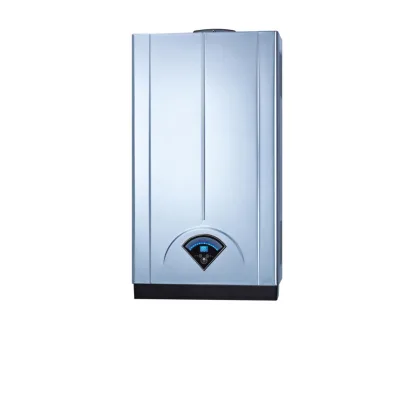
Comprehensive Sourcing Guide
Strategic Sourcing Guide for Wall Mounted Brass Gas Water Heaters
Procuring wall-mounted brass gas water heaters requires a disciplined approach that balances technical performance, regulatory compliance, and supply chain reliability. The global market for these units is characterized by a wide variance in specifications, from basic mechanical models to advanced touch-screen systems. Buyers must navigate a complex landscape where product attributes often vary significantly between batches and manufacturers. This guide provides a structured framework for evaluating potential suppliers and products, ensuring that procurement decisions are grounded in verified data and industry best practices rather than unverified marketing claims.
Technical Specifications and Material Verification
The core of any successful procurement strategy lies in the precise definition of technical requirements. For wall-mounted brass gas water heaters, the internal material composition is a critical differentiator. While the market term "brass" is common, specific product data indicates that high-performance units often utilize copper for interior components. Copper offers superior thermal conductivity and corrosion resistance compared to standard brass alloys, making it a preferred choice for longevity in wet environments. Buyers should explicitly verify the "Interior Material" specification in supplier documentation to confirm the presence of copper, as this directly impacts heat transfer efficiency and resistance to scale buildup.
Capacity is another pivotal specification that dictates the suitability of the unit for specific applications. Observed data points to capacities ranging from 8 liters to 12 liters, with specific models designated for different flow rates. For instance, certain models are rated at 8L or 12L, which determines the volume of hot water available per minute. This metric must be aligned with the peak demand of the intended installation site. A 12L unit may suffice for a single bathroom setup, whereas larger households might require multiple units or higher capacity models not currently listed in standard catalogs.
The physical dimensions and installation geometry are equally important. Wall-mounted units must fit within the designated space while adhering to safety clearances. Standard dimensions observed in the market include configurations such as 550x300x188mm, 610x350x188mm, and 560x350x140mm. These variations affect the mounting bracket requirements and the routing of gas and water pipes. Additionally, the pipe diameter is a standard interface point, with G 1/2" being a common specification. Buyers must ensure that their existing plumbing infrastructure matches these inlet and outlet requirements to avoid costly retrofitting.
Compliance, Certification, and Energy Efficiency
Navigating the regulatory landscape is essential for importing and installing gas water heaters. Compliance is not merely a formality but a safety imperative. The product data highlights several key certifications that serve as indicators of quality and safety. The "CE" mark is frequently cited, indicating conformity with health, safety, and environmental protection standards for products sold within the European Economic Area. Furthermore, "CCC" (China Compulsory Certification) is a mandatory requirement for products sold within China, ensuring that the device meets local safety standards.
Energy efficiency is a growing concern for both cost-conscious buyers and environmentally aware organizations. The market data reveals a distinction between energy efficiency grades, with "Grade One" and "Grade Two" being the observed standards. A Grade One rating typically signifies superior energy conversion efficiency, leading to lower gas consumption over the unit's lifespan. Buyers should prioritize models with Grade One certification to maximize operational savings, although these units may carry a higher initial purchase price. The specific energy efficiency grade should be cross-referenced with the product's rated power and heating capacity to ensure accurate performance projections.
Cost Drivers and Pricing Dynamics
The pricing structure for wall-mounted gas water heaters is influenced by a complex interplay of factors, including material costs, technological features, and certification status. The observed price range in the market is exceptionally broad, spanning from $5.50 to $53,320. This vast disparity suggests that the market includes everything from basic, entry-level units to highly specialized, industrial-grade systems or bulk procurement contracts. The lower end of the spectrum likely corresponds to standard mechanical models with basic features, while the higher end may reflect units with advanced controls, premium materials, or significant volume discounts.
Several specific attributes drive cost variations. The inclusion of a "Touch Screen" display or "Option" for digital interfaces significantly increases the unit's price compared to mechanical knob-based controls. Similarly, the "Type" of exhaust system, such as "Forced Exhaust" versus natural draft, impacts the engineering complexity and cost. The "Power" rating, with observed values like 100W minimum or 20KW/24KW heating capacities, also correlates with price. Higher heating capacities generally command a premium due to the increased material and manufacturing costs associated with larger heat exchangers and robust burners.
Buyers must also consider the "MOQ" (Minimum Order Quantity) as a cost driver. The observed MOQ range spans from 1 to 1000 units. Small orders typically incur a higher per-unit cost due to fixed setup and logistics expenses. Conversely, larger orders can leverage economies of scale to reduce the unit price. The "Packing" method, such as "Seaworthy 5 Layers Carton" or "Carton Packing," also adds to the final landed cost, particularly for international shipments where robust packaging is required to prevent damage during transit.
Typical Applications and Installation Requirements
Understanding the intended application is crucial for selecting the right model. The product data indicates that these units are primarily designed for "Kitchen" and "Bathroom" usage. This dual-purpose application requires a balance of flow rate and temperature stability. In kitchen settings, the focus is often on rapid heating for dishwashing and cooking, while bathroom applications prioritize consistent hot water flow for showers and baths. The "Installation Way" is specified as "Wall Mounted" and "Vertically," which is standard for space-saving designs in residential and commercial bathrooms.
The "Gas Type" compatibility is a critical factor that cannot be overlooked. The data specifies "Natural Gas" as a supported fuel source. However, gas composition varies by region, and some units may require conversion kits for different gas types. Buyers must verify that the unit is compatible with the local gas supply before installation. Additionally, the "Installation" environment is noted as "Indoor Standard Installation," implying that these units are not designed for outdoor exposure without specific weatherproofing modifications.
Power requirements also vary by region. The data lists "220V or 110V 60Hz" as available electrical options, reflecting the need for compatibility with different grid standards. Some models are even "2 Batteries Powered" or utilize "D Type 2 PCS" batteries for ignition, offering a degree of independence from the main electrical grid. This feature is particularly useful in areas with unstable power supplies. The "Timer" functionality, with options for 20 or 40 minutes, allows for precise control over heating cycles, which can be beneficial for energy management in specific usage scenarios.
Supplier Evaluation and Quality Control
Evaluating suppliers requires a rigorous assessment of their capabilities and track record. The "Brand" "Disidun" is mentioned in the data, serving as an example of a manufacturer in this space. However, buyers should not rely on a single brand name but rather evaluate the supplier's ability to meet specific customization needs. The "Customization" attribute is listed as "Available," indicating that many suppliers can tailor products to specific requirements, such as color, branding, or technical specifications. This flexibility is a valuable asset for buyers seeking to align products with their corporate identity or specific project needs.
Quality control should be a central pillar of the supplier selection process. Buyers must verify the "Image" customization options, which can range from standard factory finishes to fully branded units. The "Color" options, including White, Black, Red, Blue, Orange, and Golden, allow for aesthetic integration into various interior designs. However, the availability of these colors does not guarantee uniform quality across all finishes. Buyers should request samples to inspect the paint quality, finish durability, and overall build quality before committing to a large order.
The "Standard" and "Specification" details provided by the supplier must be scrutinized for consistency. For example, the model numbers "JSD20-D10CB1," "JSD20-D10Z," and "ES12-2" represent specific product lines with distinct characteristics. Buyers should ensure that the model number provided in the quotation matches the technical specifications required. Discrepancies between the model number and the actual delivered product can lead to significant operational issues. Furthermore, the "Origin" of the product, often listed as "China" or specific cities like "Zhongguo Dezhou," should be verified to ensure it aligns with the buyer's sourcing strategy and any trade restrictions.
Long-Term Procurement and Operational Considerations
Sourcing a wall-mounted gas water heater is not a one-time transaction but the beginning of a long-term operational relationship. The "Knob" selection, described as "Different Selective," suggests that the user interface can be customized for ease of use. However, the long-term reliability of these controls depends on the quality of the internal components. Buyers should inquire about the warranty period and the availability of spare parts, particularly for the "Glass Thickness" (observed as 4mm) and other fragile components.
The "Special" attributes, such as "Without Turbo," indicate specific design choices that may affect performance. Units without turbochargers may be quieter but could have limitations in water pressure or flow rate. Buyers must assess whether these trade-offs align with their operational needs. Additionally, the "Powered" status, whether by batteries or mains electricity, impacts the maintenance schedule. Battery-operated ignition systems require periodic battery replacement, which adds to the long-term operational cost.
Finally, the "Packing" and logistics strategy play a vital role in the long-term success of the procurement. The "Seaworthy 5 Layers Carton" specification is designed to protect the units during international shipping. Buyers should ensure that the packaging is robust enough to withstand the rigors of transit, especially for large orders. The "Lead Time" and "Capacity" of the supplier's production line should also be considered to ensure timely delivery. By focusing on these long-term factors, buyers can secure a reliable supply of high-quality gas water heaters that meet their operational needs for years to come.
Comparative Analysis of Key Product Attributes
To facilitate decision-making, the following table summarizes the key attributes observed in the market data, highlighting the variations that buyers must consider.
| Attribute Category | Observed Variations | Procurement Implication |
|---|---|---|
| Interior Material | Copper | Prioritize for thermal efficiency and corrosion resistance. |
| Capacity | 8L, 12L | Match to peak household or commercial demand. |
| Dimensions | 550x300x188mm to 610x350x188mm | Verify against installation space constraints. |
| Certification | CE, CCC, ISO (Grade One/Two) | Ensure compliance with local regulations and safety standards. |
| Control Type | Mechanical Knob, Touch Screen | Balance cost with user interface preferences. |
| Power Source | 220V/110V, 2 Batteries | Confirm compatibility with local grid or backup needs. |
| Gas Type | Natural Gas | Verify compatibility with local gas supply composition. |
| Installation | Wall Mounted, Vertical | Ensure structural support and clearance requirements are met. |
| Packing | Seaworthy 5 Layers Carton | Assess protection level for international shipping. |
This structured approach to sourcing ensures that buyers can make informed decisions based on verified data, minimizing risks and maximizing the value of their procurement investments. By focusing on technical specifications, compliance, and long-term operational needs, buyers can successfully navigate the complex market for wall-mounted brass gas water heaters.
FAQs
What interior material is used in these water heaters?
The interior material is copper, which offers superior thermal conductivity and corrosion resistance. This composition ensures better heat transfer efficiency and durability against scale buildup compared to standard brass alloys in wet environments.
Which energy efficiency grades are available for these units?
Available energy efficiency grades include Grade One and Grade Two. Grade One units typically provide superior energy conversion efficiency, leading to lower gas consumption over the unit's lifespan compared to Grade Two models.
Can the product colors be customized for specific projects?
Yes, customization is available for product attributes including color and image. Buyers can select from options such as White, Black, Red, Blue, Orange, or Golden to align with specific interior design requirements.
What capacity options exist for wall mounted gas water heaters?
Observed capacity options range from 8 liters to 12 liters. This metric determines the volume of hot water available per minute and must be aligned with the peak demand of the intended installation site.
How are these units powered or ignited?
Units may be powered by 220V or 110V electricity, or some models use 2 D-type batteries for ignition. This battery option offers independence from the main electrical grid, which is useful in areas with unstable power supplies.
What installation methods are supported for these heaters?
The installation method is wall mounted and vertical. These units are designed for indoor standard installation and must fit within designated spaces while adhering to safety clearances and specific mounting bracket requirements.